For the people who have already tried the other things. No quick fixes. No promises. Just honest work. Not sure where to start? Read the opening pages for free.
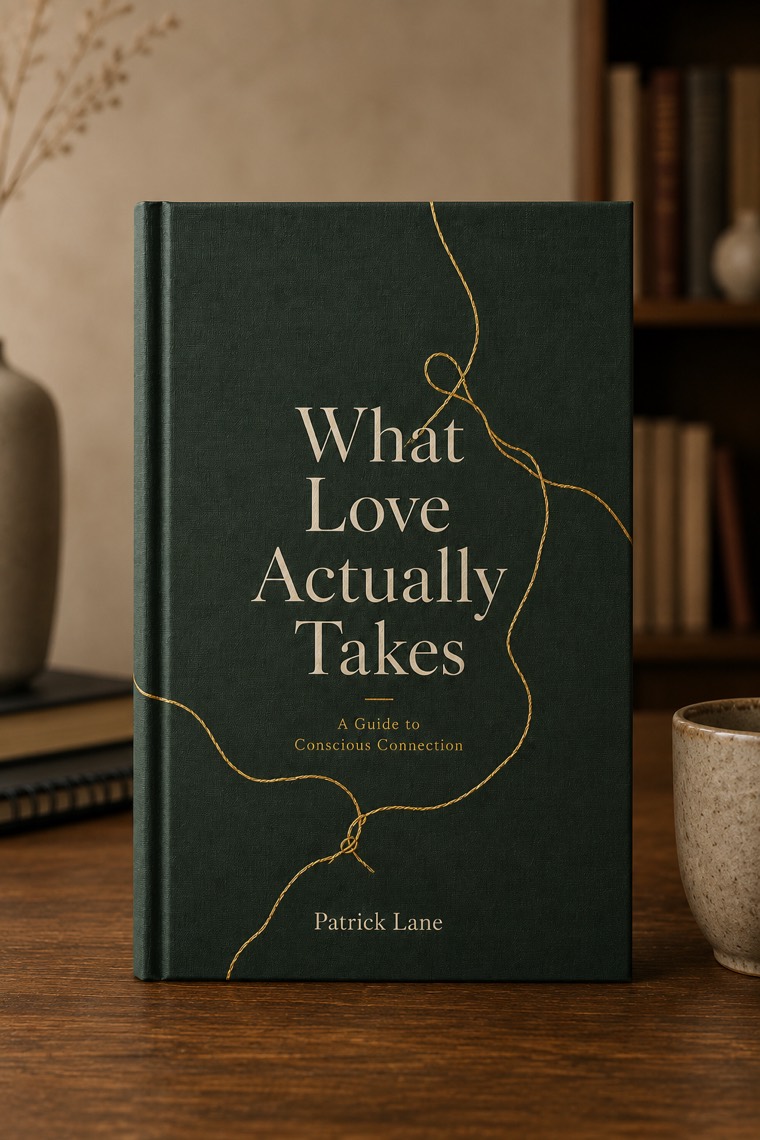
A Guide to Conscious Connection
Most people do not fail at love because they do not love enough. They fail because nobody ever taught them what love actually requires.
This is not a book about feeling more. It asks something harder: to understand what you bring into every relationship you enter. The attachment style your nervous system formed before you had language for it. The five wound patterns beneath your most disproportionate reactions. The difference between a trigger and the thing in front of you. The five core needs that, unnamed, surface as conflict, withdrawal, and slow erosion.
Nine chapters, each focused on a specific mechanism. How conflict escalates and what to do before it gets there. Why a boundary is honesty rather than hostility. And finally: why love is a choice, not a feeling, and what that means for the periods when the feeling is no longer there.
"The fight is never about the thing the fight is about."
For the person who has read the articles and understood them and still ends up in the same argument, the same silence, the same slow pulling away. You do not need more insight. You need to take it below the neck, to where the pattern actually lives.
7-day money-back guarantee. No questions asked.
The first pages of the book, exactly as they appear. Decide for yourself.
From the book
A Note Before You Begin
This book was not written to be read once and set aside. It was written for the version of you that already knows something is not working - but cannot yet name what that something is.
After thirty years of sitting with people in the middle of their relationships, I have come to believe one thing above all else: most people do not fail at love because they do not love enough. They fail because nobody ever taught them what love actually requires.
This book will not give you a ten-minute fix. It will not make your partner into a different person. What it will do - if you are willing to do the work, not just read the words - is give you a clearer picture of yourself. What you bring into a relationship. What you learned to expect from love. What you keep doing, and why.
A word about the people you will meet in these pages. The cases in this book are composites: drawn from the patterns that appear, again and again, across the clinical literature and across thousands of hours of documented therapeutic work. Names, details, and circumstances are invented. The patterns are not. If you recognize yourself in one of them, that is not a coincidence. That is the point.
Read slowly. The exercises in this book matter as much as the words. If you skip them, you will understand more. You will change less. That is your choice - and it is the most important choice you will make with what is in these pages.
Chapter One · The Relationship Is a Living Thing
Most people enter relationships hoping to receive something. To feel less alone. To be seen. To have someone choose them again and again.
That hope is not wrong. But it is incomplete.
A relationship does not exist simply to give you what you need. It exists as a third thing - something that belongs to both of you, and that needs tending from both of you, consistently, whether or not it feels easy that day.
A couple in their mid-forties once sat across from me, eighteen years married, and spent the first session listing what the other had failed to do. He had stopped planning anything. She had stopped asking about his day. Each kept a private ledger of the other's neglect, accurate to the month. When they finished, I asked one question: when did you stop taking care of the relationship - not of each other, of the relationship? They went quiet. Neither of them could remember deciding to stop. That is how it usually happens. Nobody decides. The third thing simply stops being fed, and both people notice the hunger without recognizing whose it is.
Falling in love is easy. It is biological. The nervous system does that part for you. What comes after is built, slowly, choice by choice. The people who build it well are not those who feel more than others. They are those who invest more deliberately.
A man in his thirties told me he was thinking of leaving his partner because "the spark was gone." I asked him what he had done, in the past month, to produce a spark. Not to wait for one. To produce one. He looked at me the way people look when a question has never once occurred to them. He had spent two years monitoring the temperature of the relationship without ever putting wood on the fire. He was not a bad man. He had simply inherited the most common belief our culture sells about love: that it is weather, something that happens to you, rather than agriculture, something you grow.
The book continues for nine chapters - with an exercise at the end of each one.
Get the book - $247-day money-back guarantee
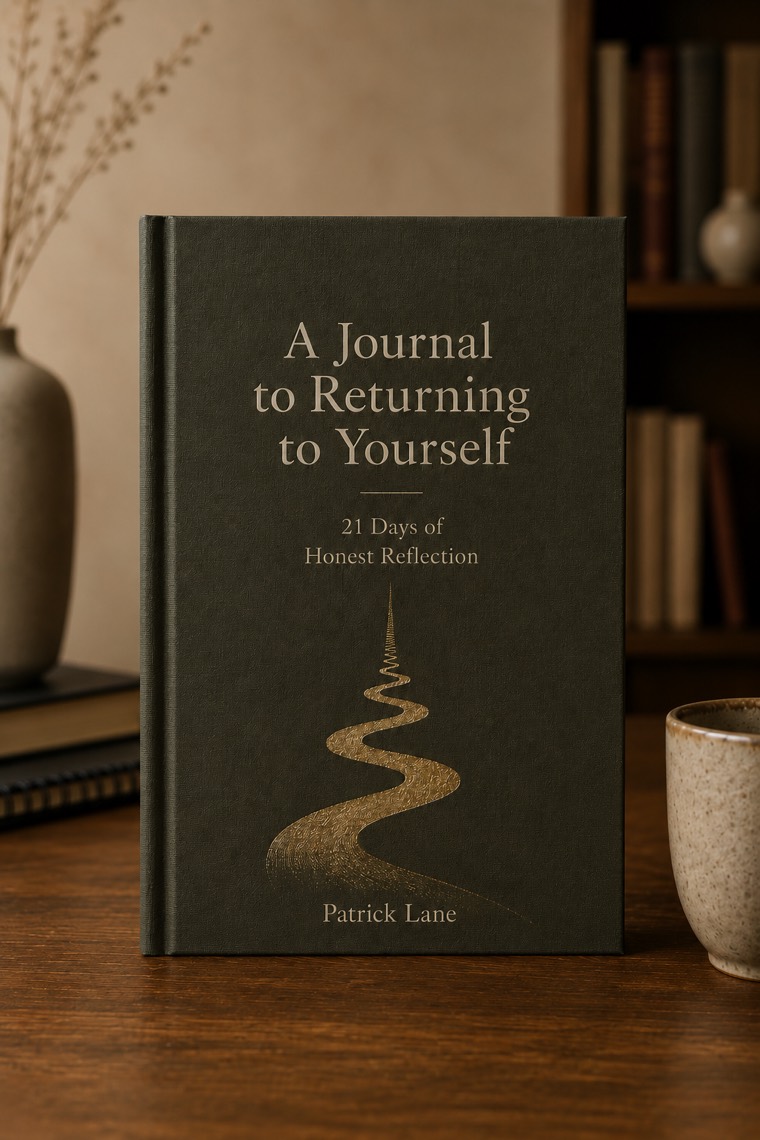
21 Days of Honest Reflection
This journal was designed for one purpose: to help you see yourself more clearly. Not to judge what you find. Not to fix it all at once. Simply to look.
Twenty-one days, three weeks, one layer deeper each time. One day per page, with room to write and a single closing question to end the day honestly. Each day opens with a short reflection, then three or four prompts, then that evening check-in.
If a question makes you uncomfortable, stay with it a little longer. That discomfort is usually pointing at something worth understanding. The journal will give back exactly what you put in.
"What would the person I want to become say to the person I was this week?"
The pattern you repeat across relationships, the attachment style your nervous system carries, and the wound underneath the reaction you keep having.
How you fight, how you actually listen, what you have been avoiding saying for months, and where the distance really comes from.
What secure love would feel like in your body, which pattern you are ready to change now, and what you want to say to the person you were when you began.
7-day money-back guarantee. No questions asked.
The book names the mechanisms. The journal makes them personal. They were built to work together - and together they cost less.
No. It is education built on clinical literature. Nothing here diagnoses or treats anything. If you are in crisis, or carrying more than you can hold alone, please work with a qualified professional; this sits beside that kind of help, it does not replace it.
No, and that is stated openly. Patrick Lane is a digital guide built on attachment research, CBT, and schema therapy. The knowledge is real; the silver hair is not. The full explanation is on the about page.
A PDF. It downloads the moment you buy, reads on any device, and prints cleanly if you prefer paper. No app and no account.
Nine chapters, around 50 pages, designed to be read slowly. A few honest pages are worth more than a full book read quickly.
No. They were built together, and the book explains the patterns the journal asks you to look at, but each one stands on its own. Many people begin with one and come back for the other.
Then you have a 7-day refund, for the full amount - email patricklaneus@gmail.com and it is handled, no questions asked. The work asks enough of you already; the risk should not be yours too.
Completely. The journal is a PDF that lives on your device. Nothing you write is collected, uploaded, or sent anywhere; it never leaves your hands.